
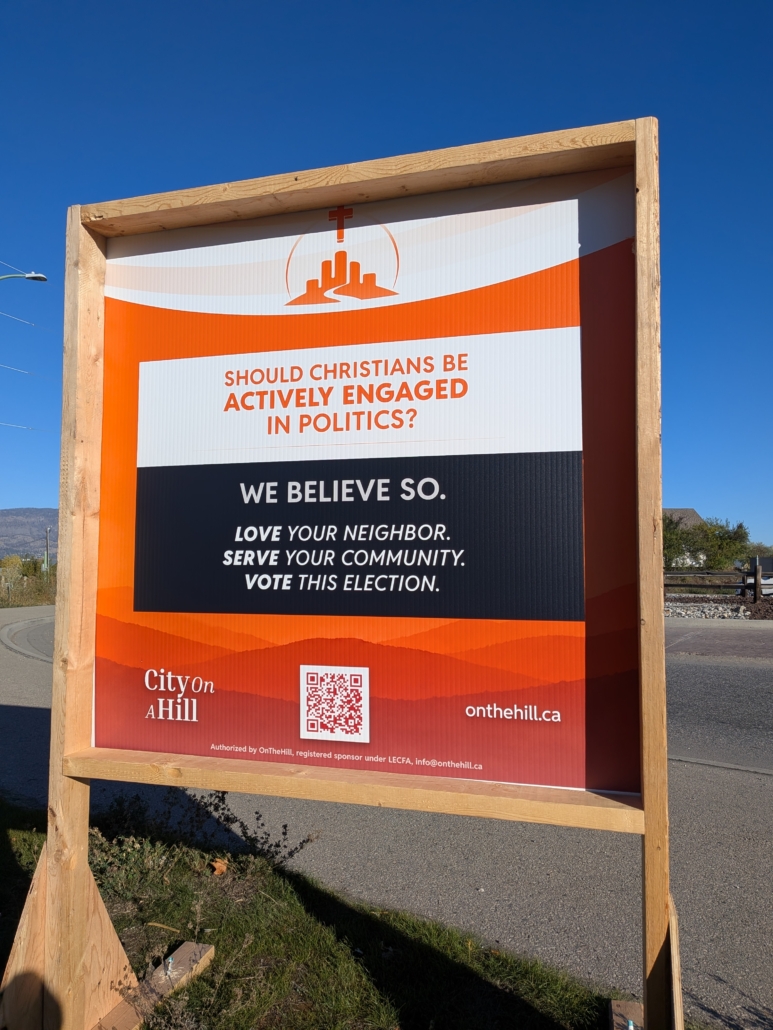
When Religion Becomes Political: Are the Rules Being Broken?
There is something deeply troubling about political campaigns entering churches under the banner of faith. Churches are places of worship, not political campaign headquarters.
City on a Hill, a registered third-party advertiser with Elections BC, is encouraging followers to use its political resources in church settings. The organization features former Conservative MP Stockwell Day in its materials, and publishes endorsements of Kelowna municipal candidates based in part on their alignment with its Christian beliefs and values.
City on a Hill: Church Resources
City on a Hill: Mayoral Candidates
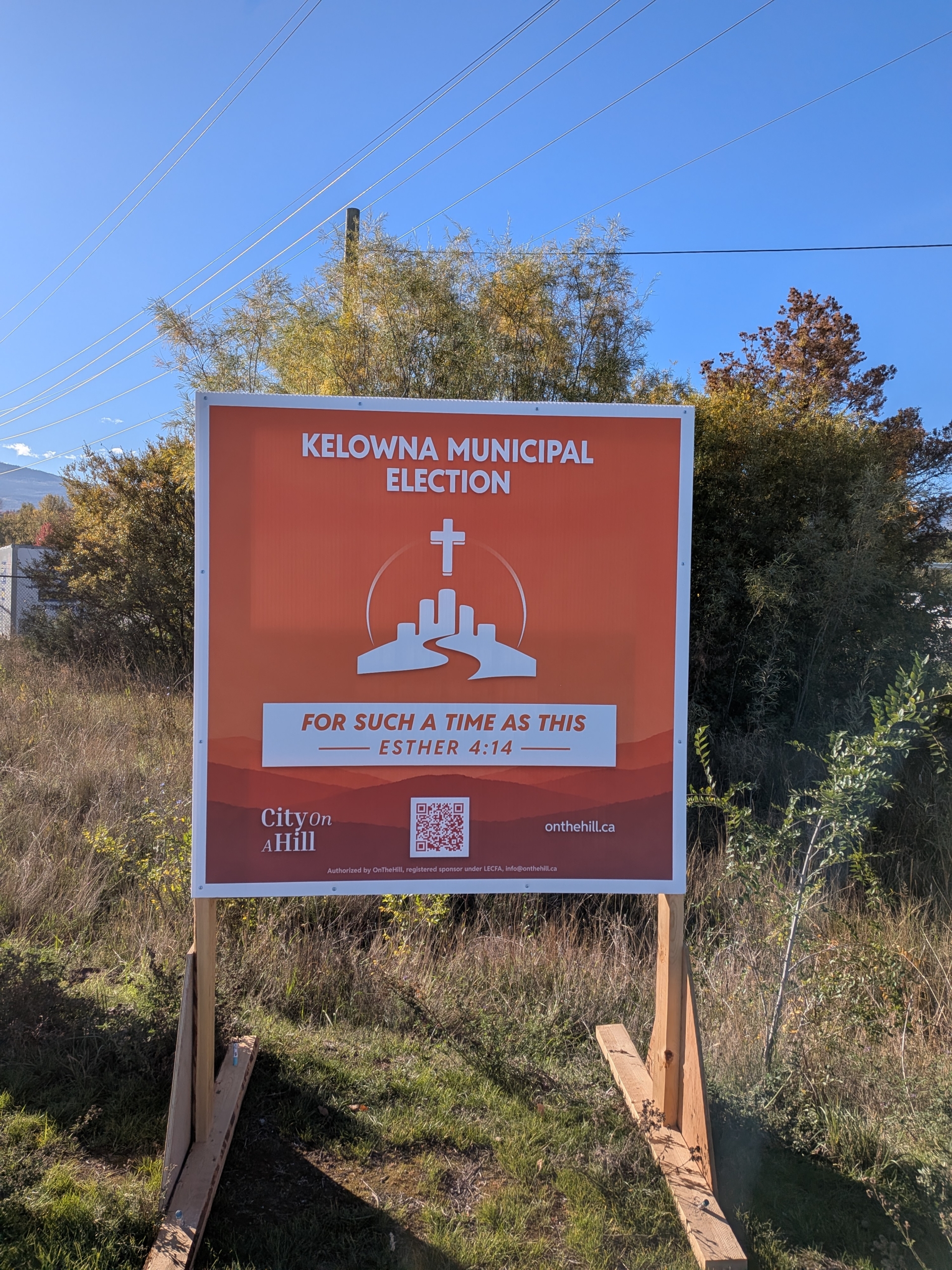
Kelowna Christian Election Sign
This raises an important question: when political advertisers encourage churches to use campaign materials, where does legitimate political advocacy end and the potential misuse of charitable resources begin?
Canada’s Income Tax Act prohibits registered charities from using their resources to directly or indirectly support or oppose political parties or candidates. Churches and their members retain their right to participate in political debate, but registered charities must comply with the rules governing partisan political activity.
City on a Hill’s registration as a third-party advertiser does not exempt churches from these rules. The key question is whether any registered churches are using their facilities, staff, publications, or other charitable resources to promote candidates.
Organized religion has often been intertwined with political power throughout history. Religious institutions have sought influence over laws, public policy, and the allocation of resources. When claims of religious superiority are used to justify discrimination, exclusion, or the denial of equal rights, the consequences can extend far beyond matters of personal faith.
In Canada, the separation of religion and government is an important principle of democratic governance. Religious freedom protects the right to practice a faith, but it does not give religious organizations an exemption from the laws governing political activity and elections.
Democracy depends on transparency, accountability, and equal application of the rules. Elections BC should clarify whether the applicable election advertising requirements are being met, and the CRA should examine credible concerns about the use of charitable resources. Voters deserve to know who is behind political advertising—and whether the rules are being enforced.

